THE WEEKEND HUNT / GEAR RESEARCH
Reselling gear worth comparing.
You can run a productive resale business with basic tools. We start with three products Jordan and Steph actually use for The Weekend Hunt and then compare other gear that may fit different budgets and workflows. The additional comparison products are research suggestions, not equipment we claim to have personally tested.
Shopping disclosure: These are ordinary, non-affiliate links to Amazon and manufacturer product pages. The Weekend Hunt currently earns no commission from these links. If we later use compensated affiliate links, we will label those clearly near each recommendation.
FROM OUR OWN SHIPPING SETUP
The gear we actually use
We don’t want to recommend gear simply because a product has a popular Amazon listing. Jordan and Steph have shared the label printer and postal scale they use in their own eBay and Whatnot reselling workflow. These links currently point to the models below; product listings and revisions can change.
JADENS JD268BT Bluetooth 4×6 Thermal Label Printer
Our experience: amazing after about four years of use. The JADENS thermal shipping label printer is part of our real eBay and Whatnot reselling setup, and we’ve been very happy with it. The linked blue JD268BT listing describes 4×6 label printing, no ink or toner, Bluetooth connection and USB connectivity. Those details are product specifications; our positive assessment is based on our own overall experience.
Why it might fit: a dedicated reselling shipping station that prints many individual parcel labels. Compare your phone/computer compatibility and label sizes before purchasing.
Accuteck 8250 Digital Postal Scale (50 lb)
Our experience: amazing in our shipping setup. The Accuteck 8250 is the postal scale we use for reselling, and we’ve been very happy with it. The product listing specifies a 50 lb maximum, 0.1 oz increments, backlit display, and tare and hold functions. We haven’t specified how many years we’ve owned the scale.
Why it might fit: weighing small and medium parcels before buying postage. Check the weight capacity for your typical packages, and verify postage weights when accuracy matters.
MFLABEL 4×6 direct-thermal fanfold labels — 1,000 per stack
These are the shipping labels we use with our JADENS printer. Our carton confirms the 4×6 size and a stack of 1,000 labels. The Amazon listing identifies them as MFLABEL direct-thermal, perforated, fanfold shipping labels (model DT101.152.1000.1-1.FBA). In our actual setup, the labels feed from behind the printer.
What to look for: direct-thermal material (not thermal-transfer), 4×6 size, a fanfold format suitable for your printer, adhesive appropriate for the packages you mail, and cost per label. Product compatibility and adhesion should be checked for your own setup. We have not published a separate long-term durability or adhesive test of this label brand.
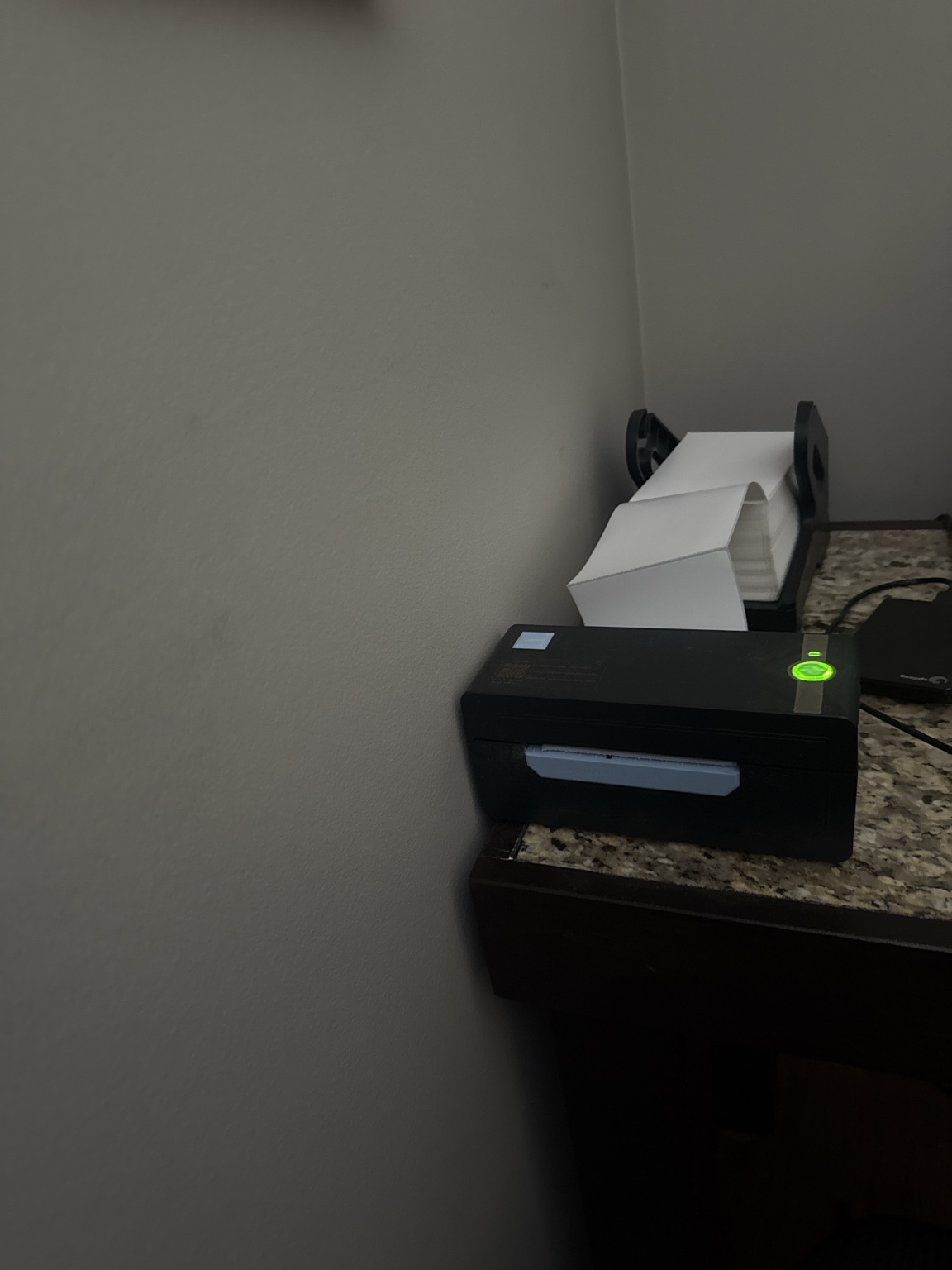
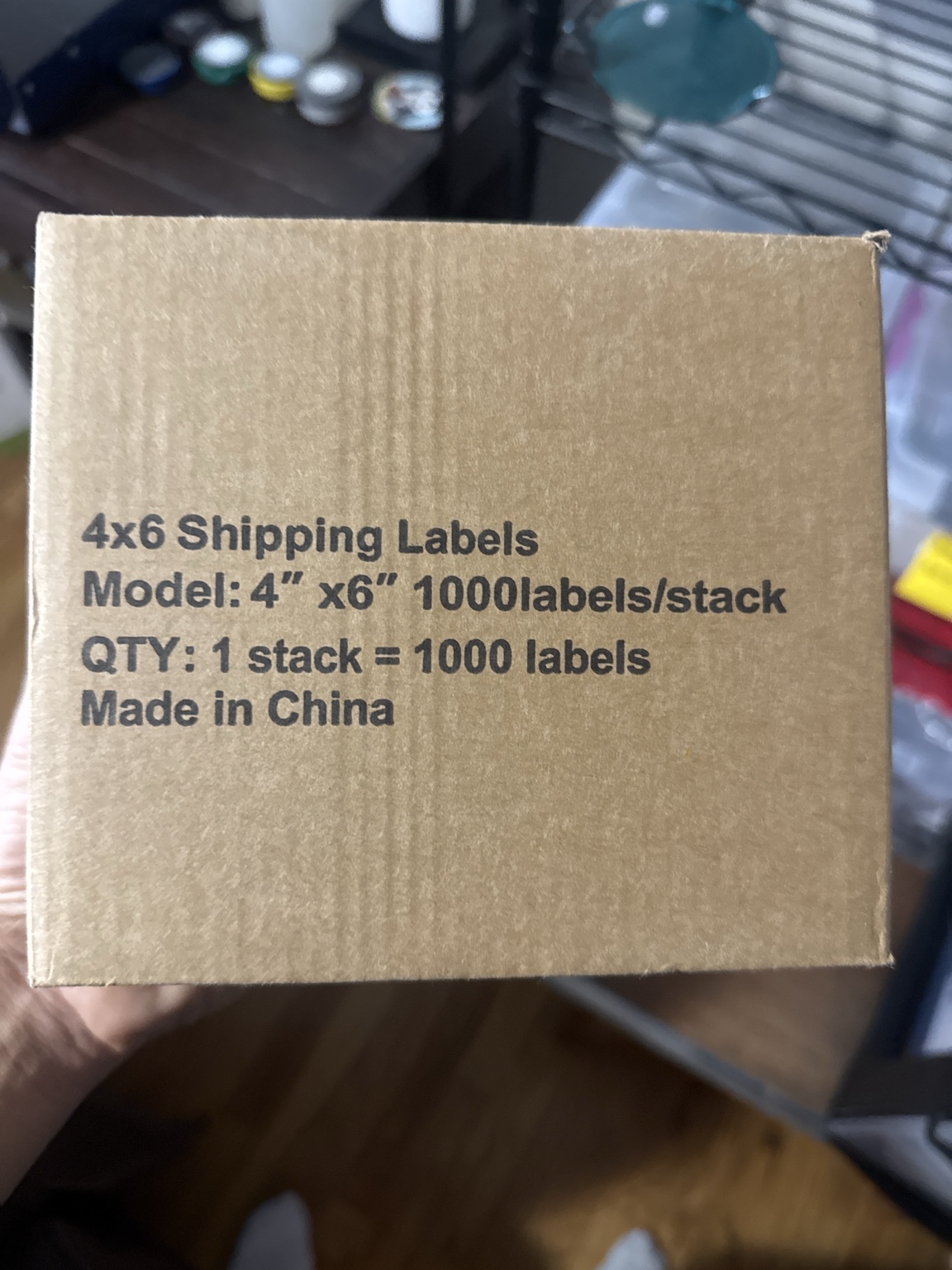
Our verdict: The printer and scale have both been amazing for us. We’ve used the printer for about four years; the scale is also part of our current workflow. We also use the MFLABEL 4×6 fanfold labels shown below. These are our own setup choices, not a promise of how each item will perform for every buyer. The Amazon links are ordinary shopping links, not affiliate links.
01 / Thermal shipping label printers
For frequent eBay and Whatnot shipments, printing 4×6 labels without ink can simplify packaging. First check whether you need mobile printing and whether the printer will work with your devices and shipping workflow.
Rollo USB Thermal Label Printer
A wired desktop option that prints standard 4×6 direct-thermal shipping labels without ink. Makes more sense for a single packing-station computer than for multiple phones or laptops.
- Best use: a fixed desktop shipping station.
- Trade-off: USB cable rather than Wi-Fi convenience.
Rollo Wireless Label Printer
A Wi-Fi/AirPrint-enabled option for shared workstations or mobile labeling. Consider it if more than one person prepares packages or you routinely work from a phone.
- Best use: printing from several devices.
- Trade-off: higher upfront cost than a wired model.
02 / Shipping scales and measuring tools
A shipping scale and tape measure matter before you buy any specialty printer. Compare maximum capacity, accuracy, display visibility, units, footprint and whether the platform supports your package sizes. You can see one Rollo Shipping Scale in the manufacturer’s gear catalog ↗. You don’t need an expensive shipping system just to weigh and measure small parcels.
03 / Product photos and video lights
Natural window light and a smartphone can be enough for most eBay product photography. If you photograph at night, use consistent diffused lighting instead of direct glare, especially for glossy records, electronics, plastic cases and reflective glass.
NEEWER NL660 Bi-Color LED Light Kit
A two-panel kit with adjustable color temperature, brightness, stands and diffusers. It may suit a dedicated product-photo or livestreaming corner, but it’s more equipment than most beginners need.
Start with what you own
For a zero-cost test, use a phone, a plain backdrop, a stable support and soft daylight. Move up to lights only if shadows, inconsistent nighttime color or room layout are genuinely limiting your photos.
04 / Storage bins that scale with one-off inventory
For items listed individually, matching bin sizes plus unique inventory IDs can simplify picking and shipping. Clear containers let you see the contents, but you should still record the specific shelf/bin identifier on every item.
IRIS USA Stack & Pull 19-qt Bins
These latching, stackable bins have built-in handles. A group of consistent bins is easier to label and place on shelving than a mix of oddly shaped containers. Verify interior measurements before storing larger books or fragile items.
A simpler inventory system
Try a bin code, item SKU and location spreadsheet before investing in inventory software. Record purchase cost, listing platform, testing condition and sold status alongside the storage location.
Paper rolls and a handheld tape gun: our practical packing approach
What we actually prefer: We use a handheld tape dispenser rather than a fixed tabletop dispenser for everyday shipping, and we often reach for crumpled packing paper instead of filling every box with bubble wrap. These choices are informed by shipping many different kinds of secondhand items—not by a paid brand partnership.
Handheld packing-tape dispensers
We have several dispensers, but a lightweight handheld tape gun makes it easy to move around a package, reinforce seams and seal boxes of different shapes. For most packing stations, a standard 2-inch-width dispenser with adjustable tape tension, a safe cutting edge and a comfortable grip is a practical starting point. Match the dispenser to your tape roll width and core.
One model worth comparing: the Scotch H180 handheld 2-inch tape dispenser ↗. According to 3M, it has a pistol grip and adjustable tension control. This is a researched option; we have not said that this exact 3M model is our personal dispenser.
Packing paper versus bubble wrap: which should you choose?
For many sturdy used goods, crumpled kraft packing paper is an excellent way to fill voids and prevent movement. It is versatile for oddly shaped boxes, stacks neatly in a shipping station and can be economical when bought by the roll. We often prefer paper for this kind of packing. However, paper is not automatically safer or cheaper for every shipment; calculate what you use per box and any effect on shipping weight.
- Good uses for packing paper: filling empty space around well-protected items, cushioning robust goods and stopping products shifting inside a properly sized box.
- When bubble wrap, foam or double-boxing may be better: delicate glass, ceramics, sharp edges, shock-sensitive electronics and other easily damaged or fragile surfaces.
- The key packing test: protect the item itself, fill gaps without crushing contents, and verify that nothing moves freely when the closed carton is gently moved.
Where we source packing paper: Supply Hut kraft paper rolls ↗. They offer different roll widths and paper weights; for example, the catalog lists 24-inch-wide rolls in 30 lb and 40 lb paper. Choose the width and thickness that fit your packing table and the items you typically ship. We haven’t specified the exact roll size we purchase, so this links to the category rather than pretending a particular roll is ours.
Cost tip: Compare cost per usable foot or sheet with the amount needed for one safely packed parcel. Buying a large roll may lower unit cost, but excessive paper, larger cartons or an extra damaged-item claim can erase any savings.
Links to Supply Hut and 3M are currently ordinary external links, not affiliate links. Prices, product offerings and specifications can change.
How we decide what deserves a recommendation
- Does it solve a real bottleneck in listing, packing or shipping?
- Is there a cheaper method that works nearly as well?
- Are the specifications and compatibility verified?
- Have we actually used it? If not, we say so.
- Can we explain the trade-offs without inventing savings or results?
Our future goal is to add photos of the tools Jordan and Steph really use, alongside hands-on notes and a few approved affiliate links. We won’t turn this page into a wall of generic shopping buttons.
Explore more practical reselling resources
Read our reselling blog, browse beginner guides or see the videos and resources we selected from the reseller community.
Information checked against linked manufacturer and marketplace resources on November 6, 2026. Product specifications, stock and pricing can change.

