REAL-WORLD SOURCING · OUR EXPERIENCE
Are abandoned storage lockers worth buying for resale? They can be fun, but they’re not our favorite sourcing method. We’ve bought a handful of storage lockers over the years. We enjoyed the treasure-hunting side of it, but we’ve also found that the work involved can outweigh the excitement. Given the choice, we’d usually rather spend a free day at garage sales, estate sales or thrift stores.
Two actual storage auctions we won in 2025
Here are two real auction wins from our own account. On April 24, 2025, we won a storage unit in Lombard, Illinois, for a final bid of $100. On August 22, 2025, we won another in Elgin, Illinois, for a final bid of $780. That $680 difference in winning bids illustrates how much prices can vary before you even begin the work of clearing a unit.
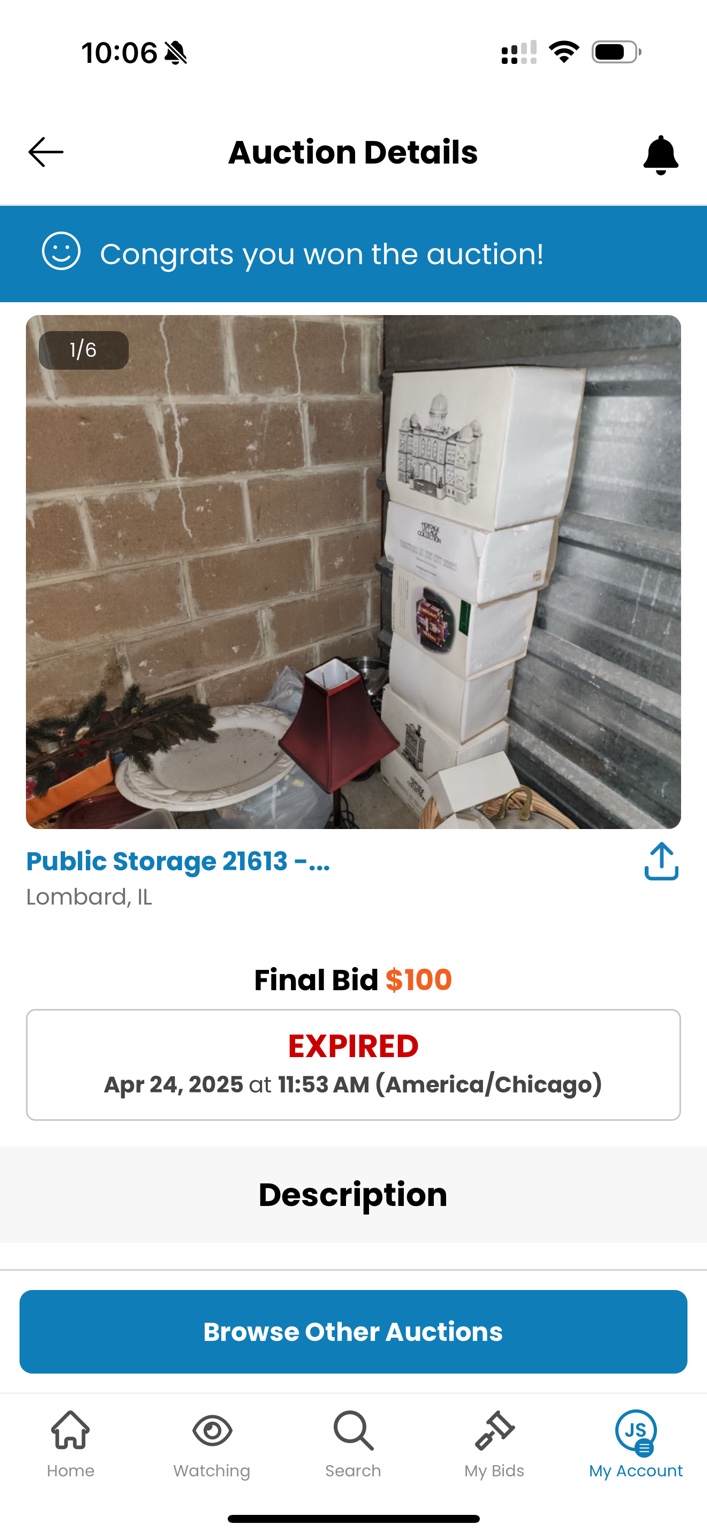
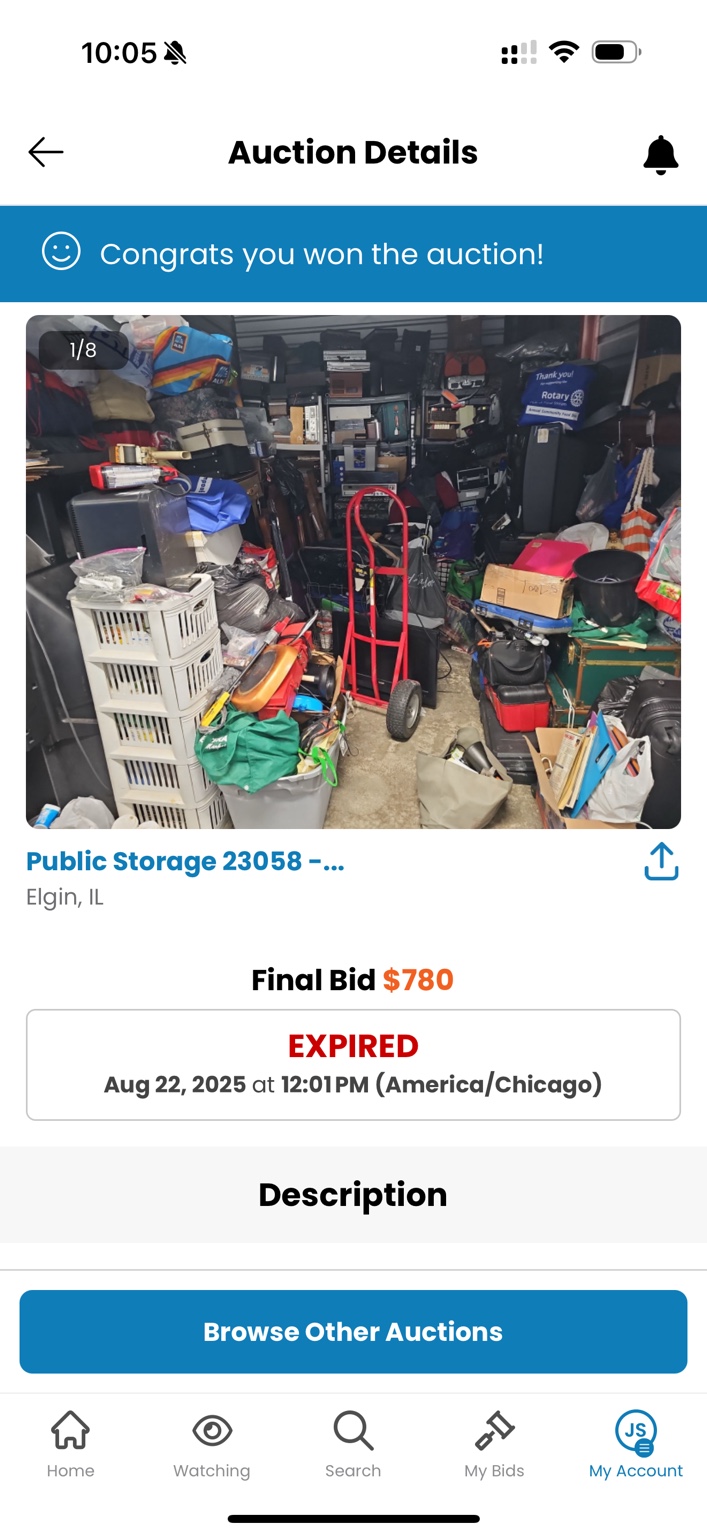
Important: These are actual winning bid amounts, not our total acquisition costs or our profit. Auction fees, taxes, transportation, cleanup supplies, disposal and time can all affect the final outcome. We are not making an earnings claim or assigning the haul photos below to either of these specific lockers.
Why storage locker auctions are exciting
The appeal is easy to understand. You see a collection of boxes, furniture and other belongings, and there’s a mystery behind what you can’t see. For anyone who loves secondhand treasure hunting, an auction can feel like a bigger version of that surprise you get when you spot something good at a sale.
But there’s a difference between finding one interesting item and taking responsibility for an entire locker of assorted belongings. With a locker, you may have to deal with everything, whether it has resale value or not.
What a winning bid really commits you to
This is the part we’d urge newer resellers to think about. The auction itself may be quick; the actual work comes afterward. Depending on the facility rules and what the unit holds, you’re facing some combination of:
- Transportation: Can your vehicle accommodate the contents? Will you need a truck or trailer?
- Physical work: Moving and unloading boxes, furniture and heavy items isn’t the same as walking away from a garage sale with a couple of bags.
- Sorting and research: Every item takes time to sort, identify, test and decide whether it deserves a listing.
- Inventory storage: You’ll need enough room to keep items organized while you process them.
- Cleanup and disposal: Not everything will be sellable. Donation, recycling and appropriate disposal can consume both time and money.
- Facility rules: Payment terms, pickup windows, access and cleanout expectations vary. Read the actual auction rules before bidding.
The hidden cost of a locker isn’t just the bid. It’s also the hours you could have spent photographing and listing inventory—or finding a few items you really want to resell.
Behind the scenes: the hauling and sorting side
These are real photos from our buyout and sourcing experiences. A packed truck or car isn’t a profit report, but it does show the physical and logistical side of moving varied secondhand inventory. We haven’t tied these particular photos to the two dated auction screenshots above.
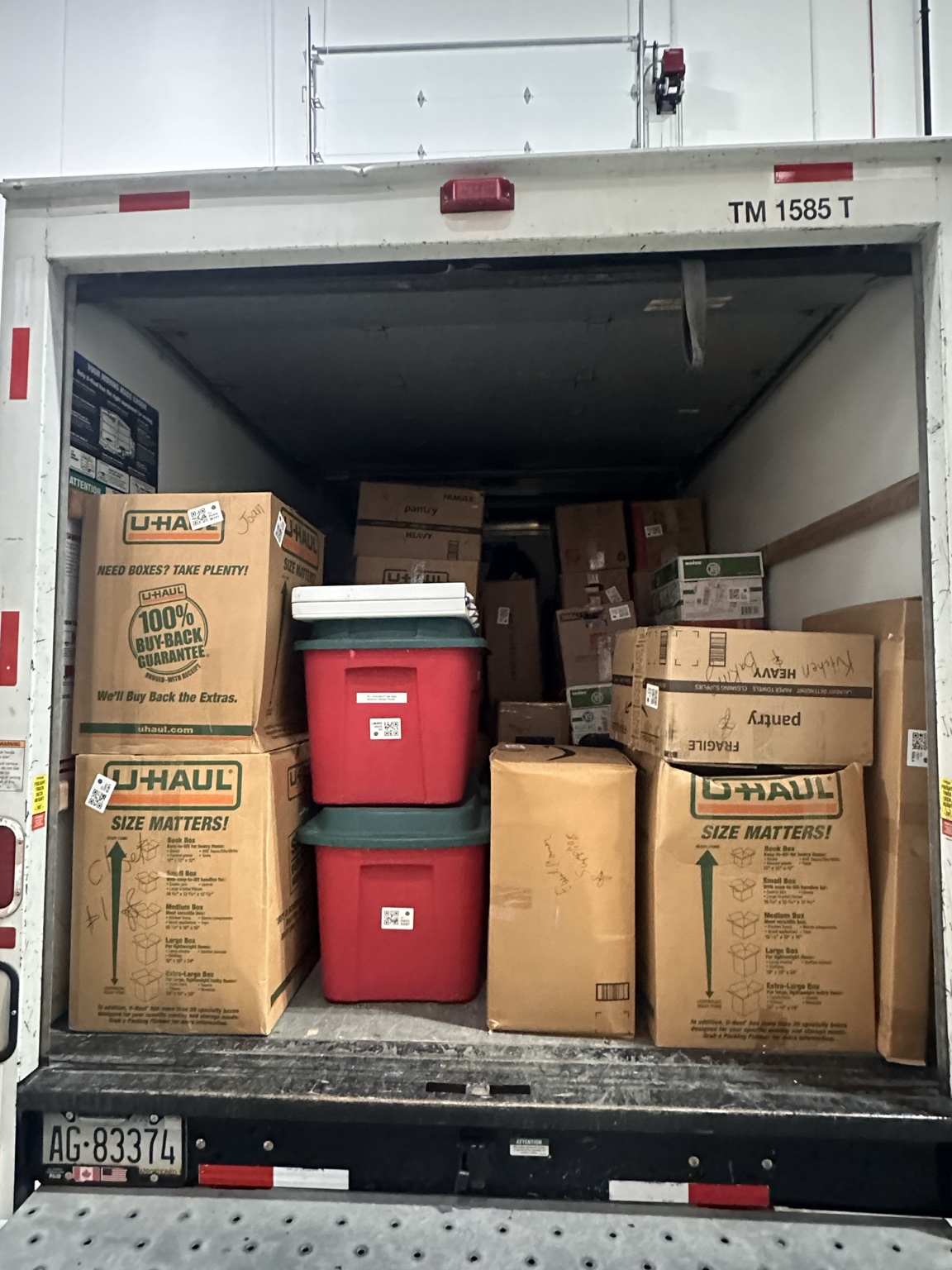
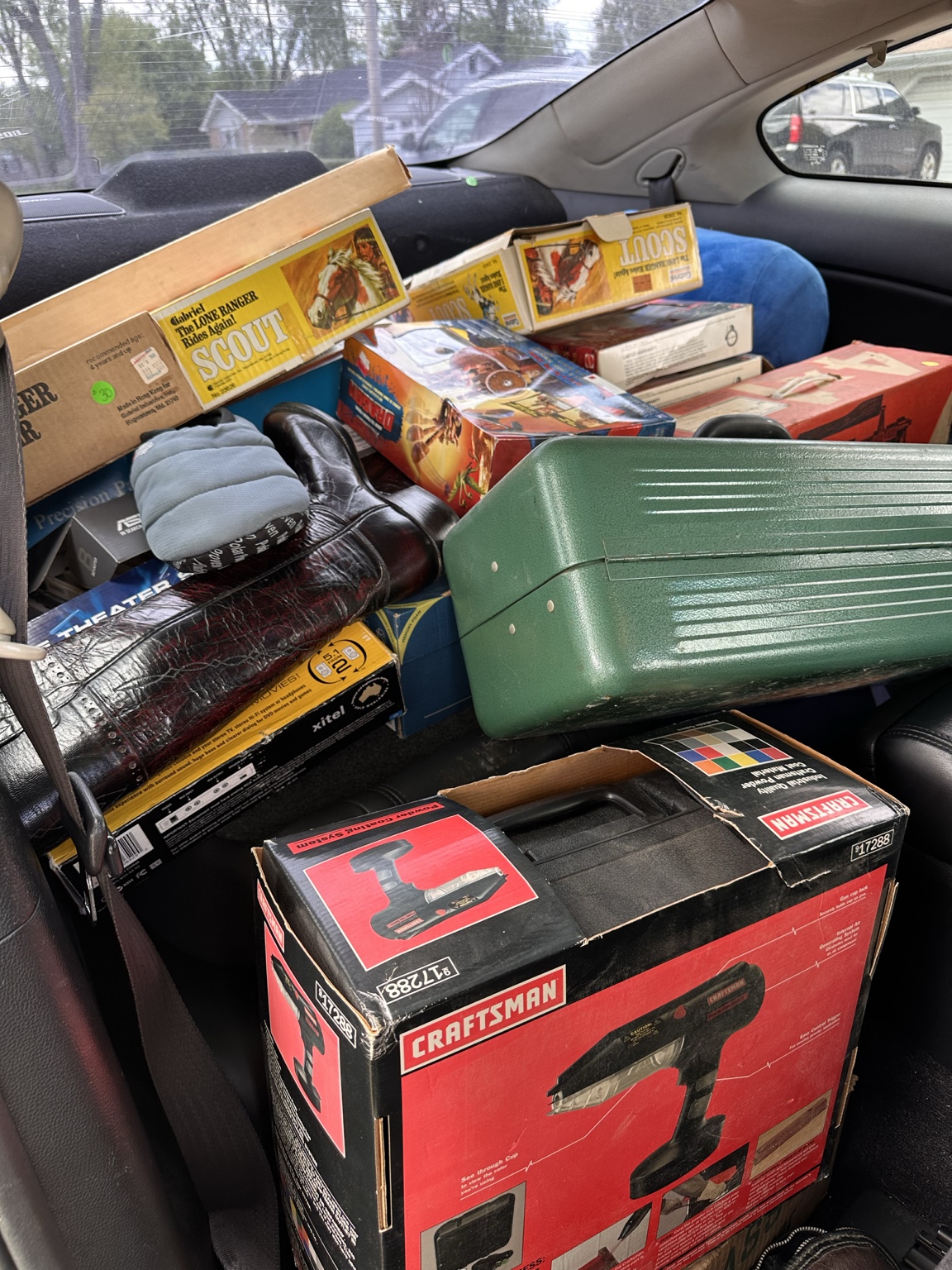
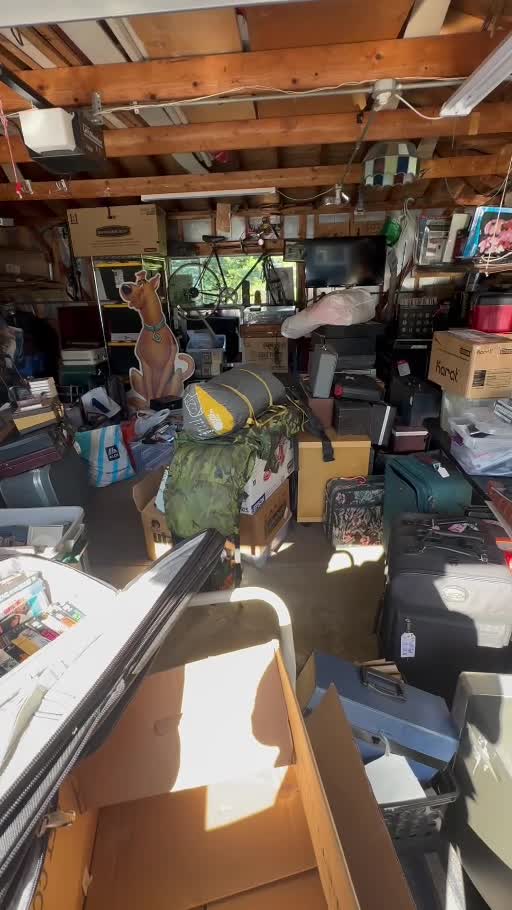
We also have a short behind-the-scenes video of a crowded garage from one of our buying experiences. We’ll add the playable clip when we have a supported video host; this image is a frame from that footage, not a claim that the video depicts either named storage-unit auction.
Why we’d usually rather go to garage sales, estate sales and thrift stores
After buying a handful of lockers, we still find the more selective sourcing trips appealing. At garage and estate sales or thrift stores, you can usually examine an item, check for missing pieces or damage, look up the model, compare sold prices and decide whether it makes sense before spending money.
We also enjoy searching across all kinds of categories. Our recent finds include old Chicago retail publications, a vintage watch, retro mushroom kitchenware, a Talkboy, outdoor paddles and even a specialized electrical hardware cover. We can choose an individual item from an unfamiliar category without buying an entire room full of things along with it.
That freedom helps us focus on quality rather than just quantity. There’s nothing wrong with volume if your business is built for it, but more stuff isn’t automatically more profit.
When might a storage unit actually make sense?
We’re not saying we’d never buy another locker. It could be worth considering if the visible contents include categories we understand, the price leaves a healthy margin for risk, and we already have the time, vehicle, storage and disposal plan to clear everything responsibly.
The key is not to bid based on an exciting possibility you can’t verify. You might find surprises—but you should be comfortable with the less exciting outcome too. We wouldn’t assume what’s inside sealed boxes or that one collectible-looking item pays for everything else.
A simple storage auction checklist
- Research whatever you can actually see, not what you hope is hidden.
- Decide on a maximum bid before the auction gets exciting.
- Account for travel, loading help, truck rental, disposal and supplies.
- Know the facility’s payment, pickup, cleanout and any deposit requirements.
- Have a realistic place to store everything while you process it.
- Plan how to handle private documents, restricted goods and potentially hazardous items properly.
- Ask whether that same budget and time would buy better inventory at garage or estate sales.
Our verdict: fun sometimes, not our main strategy
We’ve had fun buying abandoned storage lockers, but we don’t do them very often. The amount of work can take away from the part of reselling we love most: picking through a sale and finding something interesting for a great price.
For us, garage sales, estate sales and thrift stores usually win. We have more control over what we buy, how much inventory comes home and how much time it will take to process. That doesn’t mean a locker can’t be profitable for someone with a different setup; it’s simply not where we prefer to spend most of our sourcing energy.
Want to plan a more selective treasure-hunting trip? Start with our garage and estate sale finding guide. Or explore ten real items we’ve recently sourced to see the range of categories we hunt for. Those finds are not presented as storage-locker contents.
Before you bid
Auction terms and local rules vary. Confirm the current requirements with the facility or auctioneer, and handle private records and hazardous or restricted materials appropriately. This article shares our personal preference, not a guarantee of profit.


Leave a Reply